Folklore · Phophonyane Falls, near Piggs Peak in the north-west of Eswatini, Eswatini · Old tradition, in guidebooks by 2012
The tears at Phophonyane
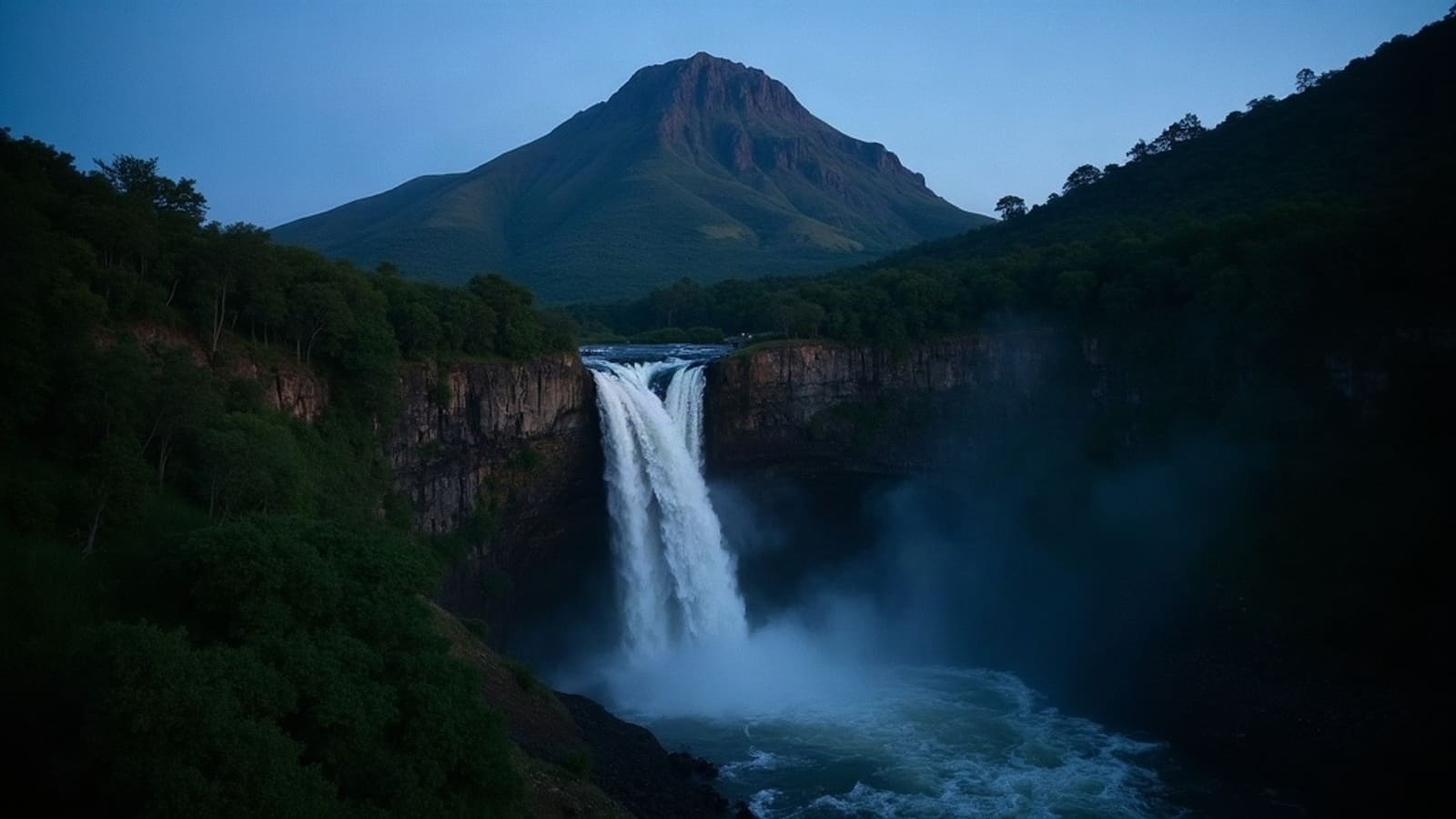
The Phophonyane River comes down off the hills above Piggs Peak in a hurry, losing 240 metres in two kilometres, and at the end of the run it goes over a lip of grey rock in one long white fall that you hear a good while before you see it. The rock it lands on is some of the oldest exposed on the planet, three and a half billion years, which the geologists find exciting and the story does not mention at all. The story is about a girl.
She lived in these hills and was, as girls in stories are, the most beautiful in the district, and a young warrior wanted her. Her people set the price. He was to go up Gobolondlo, the rugged mountain that stands over the valley, and bring back the skin of a leopard, and then he could have her. He went. Gobolondlo was not empty. Witches lived on its slopes, and they did not care for a stranger walking their ground with a spear, so they took him, and for his trespass they turned him into a white flower and left him among the grass, to bloom and to die there with the rest.
The girl waited. When he did not come down after many days she went to the river and sat on the bank and wept, and her tears did not stop. They ran down the rocks and gathered and grew, and the waterfall is the shape they made. Phophonyane, people at the falls will tell you, is what that sounds like. In spring the slopes of Gobolondlo still come out in small white flowers, which is the other half of the proof.
It is an origin tale of a familiar kind, a landscape explained by a grief, and it is told at the falls, in the lodge that stands beside them, and in the guidebooks that cover the north of the country. We have not found it written down before the guidebooks of the 2010s, which is why this entry sits at 2012; how long people have told it beside the water before anyone thought to print it is not something the falls are prepared to say. It belongs to the people of these hills, and we pass it on as they tell it.
Eswatini is thin on written folklore in English, which is not the same as thin on folklore. The Swazi tradition is full of the ancestors, the emadloti, who watch their descendants and expect to be consulted; of the sacred mountains of Mdzimba where the kings are buried and where people hid from Zulu raiders in the caves; of the rock at Nyonyane in the Mlilwane valley where the condemned were once made to walk off the edge, and which is called the little bird for the way they fell. Less of it reached print in the nineteenth century than Zulu or Sotho tradition did, because fewer missionaries with notebooks came this way, and what did was mostly the business of kings. The waterfall is one of the few stories that visitors regularly hear, because visitors regularly stand in front of it.
Go in the late afternoon, when the sun is off the water and the spray has started to feel like weather. Take the path from the reserve gate, and do not, whatever you want from anyone, go up Gobolondlo after a leopard.
Others saw something near here

The stones above Kaapsehoop
A ring of standing stones on the edge of the escarpment, called a 75,000-year-old calendar by one man and a cattle kraal by the archaeologists.
Press report
The flash in the Nhlangano valley
Four missionaries on a night hike saw a glowing orange sphere sit over the grassland and light the whole valley white, twice, in silence.

The consul and the island
Rounding Ponta Vermelha on a blue December afternoon, a diplomat saw two plates pressed rim to rim, the size of a ship, hanging over the island in the bay.