Other · Near Onamatanga village, Omusati Region, far northern Namibia, Namibia · 2011-11-20
The ball that fell on Omusati
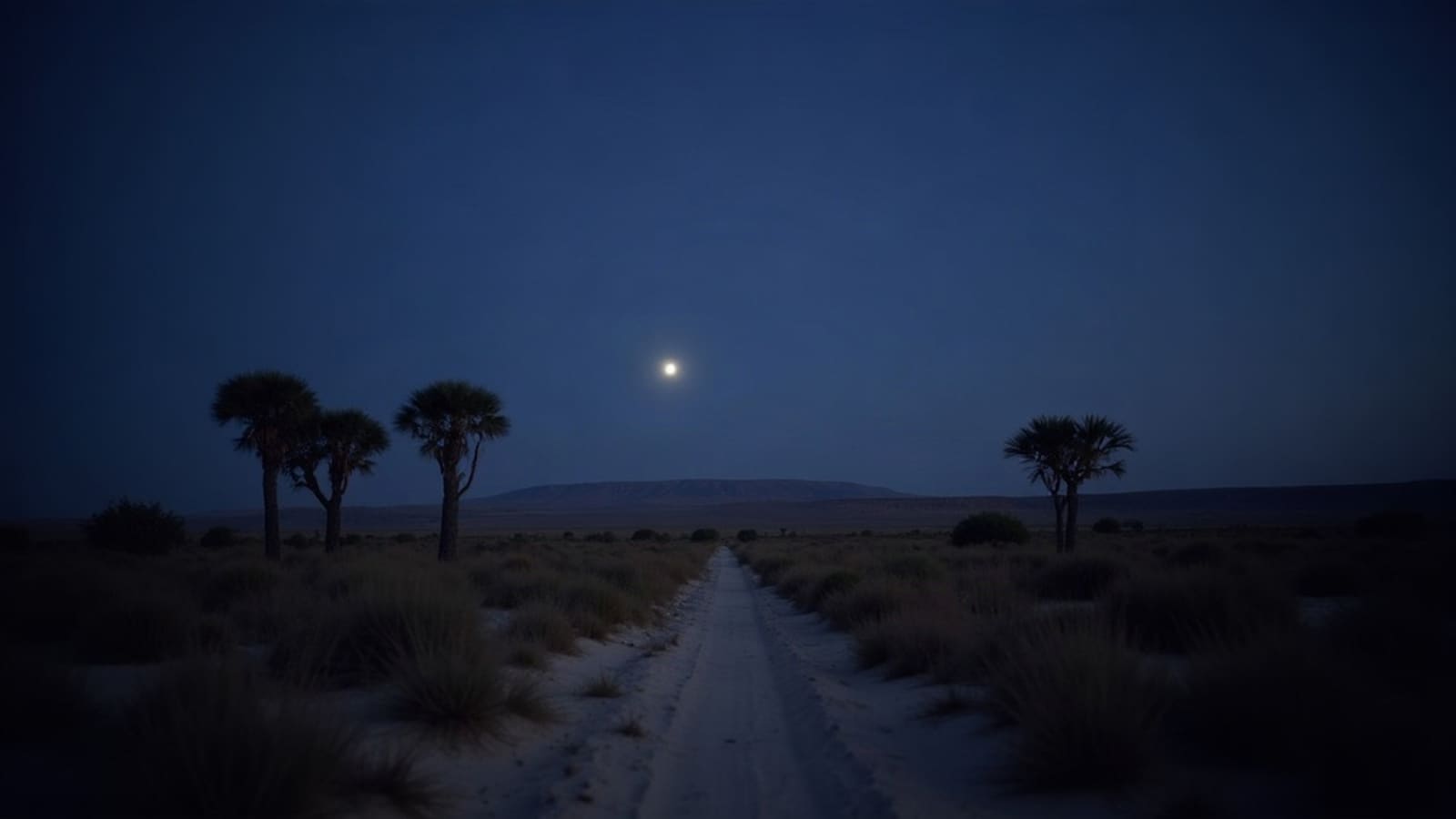
The Omusati Region is the flat, thickly settled country between Etosha and the Angolan border, mopane and makalani palms and a great many cattle, and in the third week of November 2011 people there kept hearing explosions in the sky. Not thunder, they said afterwards; the rains had not properly started. Bangs, high up, over several days.
Then a farmer walking his land near Onamatanga, west of Outapi, found the thing that had made at least one of them. It was a metal ball, dull and rough, hollow, about a metre and ten around the middle, a little over six kilograms in weight, with no markings of any kind, and it looked as though it had been made in two halves and welded together. Eighteen metres away there was a crater in the sand nearly four metres wide and a third of a metre deep. The ball had hit, dug the hole, and bounced.
He told the police. The police, sensibly, told nobody for a month, and took it to Windhoek.
When The Namibian broke the story on 22 December it went round the world in a day, because a ball falling out of the sky in Africa with no markings is a headline that writes itself, and because the police had called in NASA and the European Space Agency for help. The Huffington Post asked whether it was proof of alien life. The Namibian police, and Paul Ludik, the director of the National Forensic Science Institute who had examined it, were having none of that. It was made, he said, of a metal alloy known to man and used in space vehicles, and it was of no danger to anyone. He noted, with a forensic scientist’s patience, that space agencies do not often put up their hands when bits of their satellites come back down.
What it almost certainly was is a pressure vessel: a spherical tank of the kind that holds hydrazine or helium on a satellite or an upper stage, wrapped in composite fibre precisely so that it can survive the heat of re-entry when the rest of the vehicle burns up. Identical balls had dropped on a farm in Brazil and on a sheep station in Australia in 2008, and more have turned up in the fields of Murcia in Spain since. They come down along the tracks of decaying rockets, and a good deal of the world’s used rocketry goes over southern Africa on its way into the Indian Ocean.
No agency ever claimed the Omusati ball. It stayed in police custody in Windhoek, and the crater filled in with the first proper rains. The villagers who had spent a week listening to the sky had been right about that, at least: something was up there, and it was coming down.