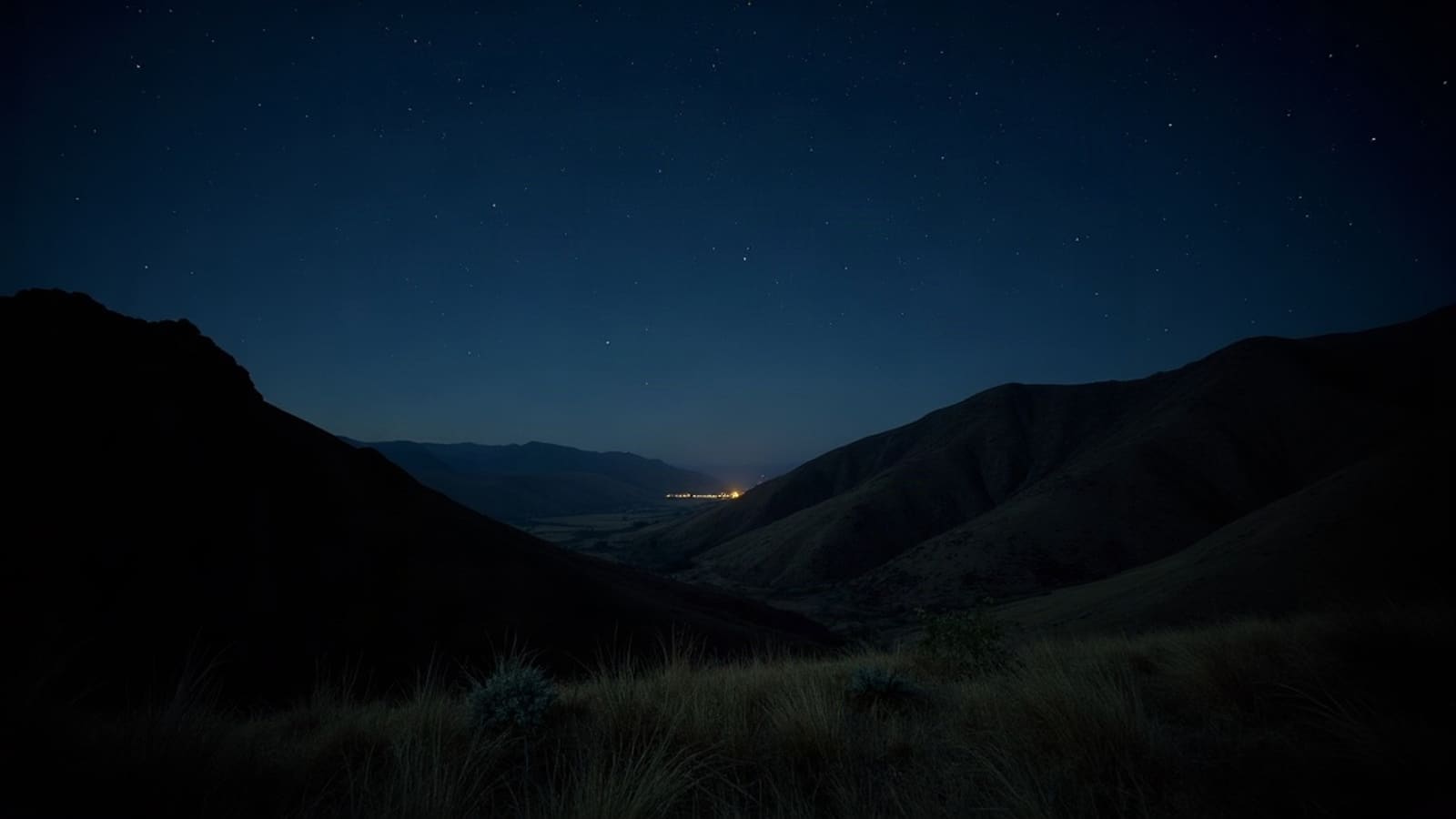
UAP · A farm said to be twelve kilometres west of Leribe, near the Madibamatso river, Lesotho · 1996-06-21
The Leribe documents
On 21 June 1996 a set of documents arrived, unsigned, in the post of two German researchers, and a copy went, also unsigned, to Cynthia Hind in Harare. They told a very complete story about a farm in the north of Lesotho.
At a quarter past nine on the night of 15 September 1995, the papers said, a farmer named Peter Lachasa heard a strange sound in the sky and then a dull explosion. Neighbours had seen a bright light come slowly down into the hills and burst into flashes. They walked to the place together and found a humming thing in a ring of burning grass, too hot to approach, that faded from bright to dull grey as they watched. At half past ten Lachasa was at Leribe police station reporting it to the duty sergeant, because it was frightening his cattle. Fourteen minutes later the sergeant and a constable were at the site, looking at a disc eighteen metres long and three high, no windows, no doors, no damage.
From there the papers move fast. A Lesotho official is woken. A two-page fax reaches military intelligence in Bloemfontein at seventeen minutes past midnight. A commander orders an aerial assessment, two Alouette helicopters go up, and by seventeen minutes past one a captain is standing in four hundred square metres of fire reporting a metallic disc of about twenty metres, intact. Pretoria orders a sterile zone. A Foreign Recovery Unit from Valhalla arrives at five to six in the morning and takes over. Three occupants, later pages add, humanoid with something reptilian about them, are flown to Swartkop. The Kalahari crash of 1989 is cited in passing as precedent.
Hind read it with a sinking feeling she later described in print. She had spent several years taking apart the Kalahari documents, and this had, as her contact in South African intelligence put it, the same fingerprinting with the spelling corrected. The metres were spelt the American way. A general named Dwight was supposed to be running air force intelligence, and a Colonel Holt turned up in a South African chain of command; Holt was the name of the deputy base commander at Bentwaters, in Suffolk, in the famous English case of 1980. Her intelligence source rang the Pretoria number on the letterhead. It was genuine, and nobody there, right up to the top brass, had heard of General Dwight or Colonel Holt. Commander Human could not be shown to exist and Captain Louw could not be traced. Nor, the source added, could a recovery unit have got from Pretoria to the Maluti in under five hours in the dark; real intelligence officers would have waited for daylight.
Then word came from another direction that the young man behind the Kalahari papers, who had confessed to that hoax in a Munich back room a few years before, was back in South Africa. Hind put the two together and said so in the July 1996 issue of UFO Afrinews under the heading Lesotho, another UFO hoax? In January 1997 the American newsletter CNI News reached the same conclusion under a blunter headline. The Germans who had received the papers sat on them for months before publishing anything, which for the trade was unusual restraint.
The documents are still online, and still occasionally presented as a cover-up. The farm west of Leribe, if it exists, has never been named by anyone who has been to it.
In Cynthia Hind's files
The case files behind this story
- Lesotho: Another UAP Hoax?
Cynthia Hind, UFO Afrinews No 14 (July 1996), spread 04-06 - Lesotho crash claim: Hesemann confirms no proof
Cynthia Hind, UFO Afrinews No 16 (July 1997), spread 21-22
