Folklore · Maphutseng, in the Mohale's Hoek district of Lesotho, Lesotho · Old tradition, in print by 1861
Kholumolumo, the swallower of the world
Once, the story begins, everyone died. Not in a war or a famine: they were eaten. A beast came through the country so long that the sharpest eyes could not see from one end of it to the other, and it swallowed the people, the cattle, the dogs and the chickens, until nothing moved in Lesotho but the beast itself, lying full in a mountain pass, too swollen to turn round.
One woman escaped it. She hides in a cattle kraal, or under the ash heap, and there she gives birth to a son. When she looks at him closely she sees that he has come into the world with a string of divining bones round his neck, and so she names him Litaolane, the diviner. She goes out to gather straw for his bed. When she comes back he is a grown man, and he is asking where everybody is.
She tells him. He takes a knife and goes to find the beast, and the beast, seeing a man, does what it does. It swallows him. Inside, in the dark, among the living who were swallowed before him, Litaolane starts to cut. The beast roars and falls. He cuts his way towards daylight, and the voices around him cry out that he is stabbing them too. But the opening is made, and through it the nations of the earth come out into the sun, cattle and all. In many versions the first man out is nicked by the knife, and never forgives it.
That is the first half. The second is the part the Basotho tellers seem most interested in. The people Litaolane has saved look at him and do not like what they see. He never had a childhood; he is a monster, not a man; he should go. They dig a pit and cover it and put a stool over it and invite him to sit. He pushes one of them into it instead. They hide a spearman in the reeds where he suns himself. He knows. They try to throw him into a fire and fall in themselves. In the end, pursued to a river, he turns into a stone, and the man chasing him picks the stone up and throws it across the water in a rage, and on the far bank it becomes Litaolane again, smiling. In other tellings he is at last killed, and his heart flies out of his body as a bird.
The French missionary Eugène Casalis heard the tale in Moshoeshoe’s country and printed it in 1861 in his book on the Basotho, which is where this entry’s date comes from, and he confessed himself puzzled by it: a child born in a stable with prophetic gifts, victorious by being swallowed, then persecuted by those he saved. He wondered whether it was a garbled memory of the Gospel and decided, honestly, that he could not say. The Basotho he asked told him they had no explanation either. It was simply the story.
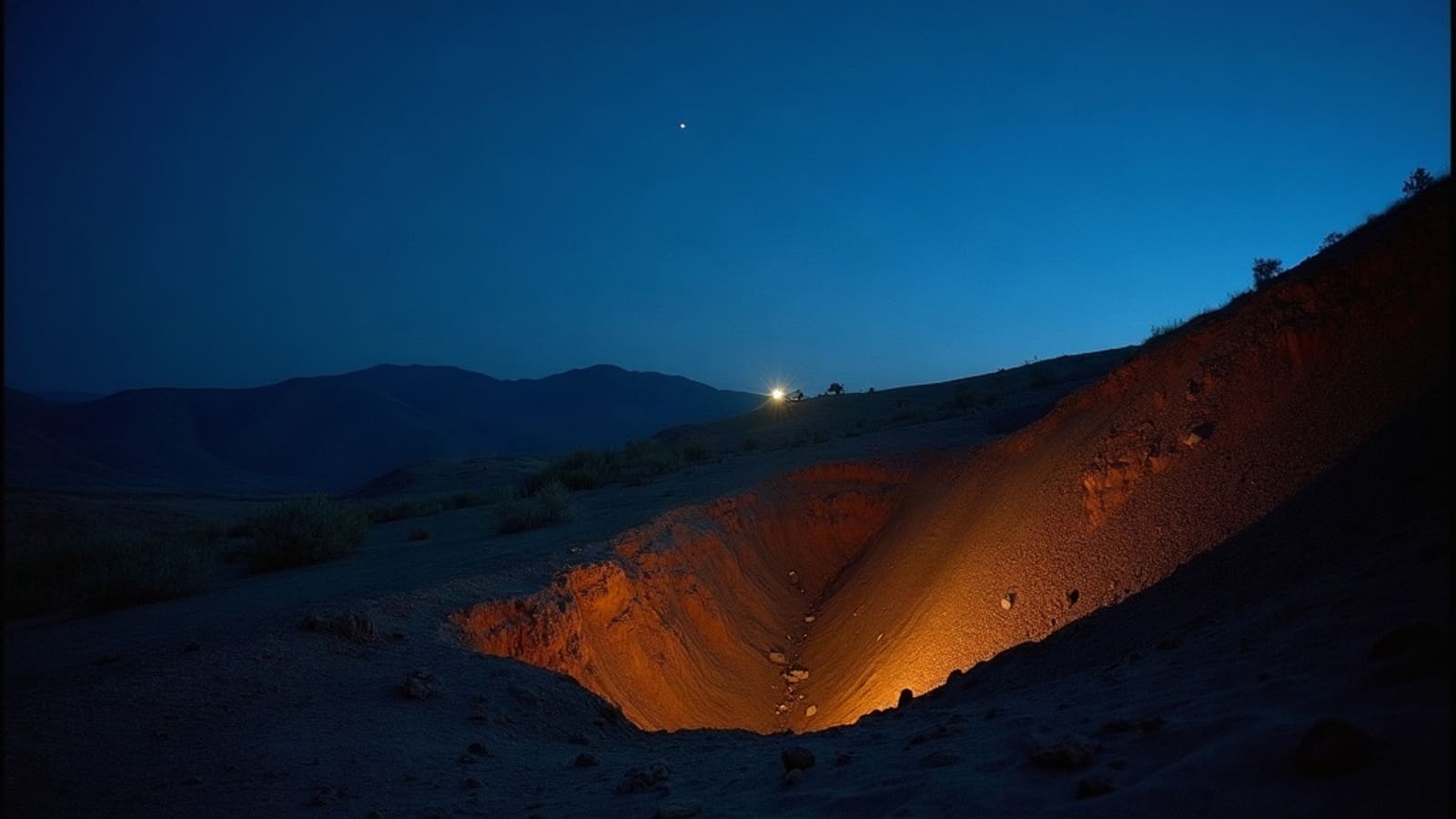
The beast has a name, kholumolumo, which may mean the great noise, and it has a shape in the telling that is very like a thing the Basotho had seen: enormous bones in the hillsides, and three-toed tracks in the sandstone. In 1955 two brothers named Ellenberger began digging into a slope at Maphutseng in the south-west and brought out several hundred bones of a nine-metre animal that had died there 210 million years earlier. In 2020 it was formally named. It is called Kholumolumo. The people had the name ready.
