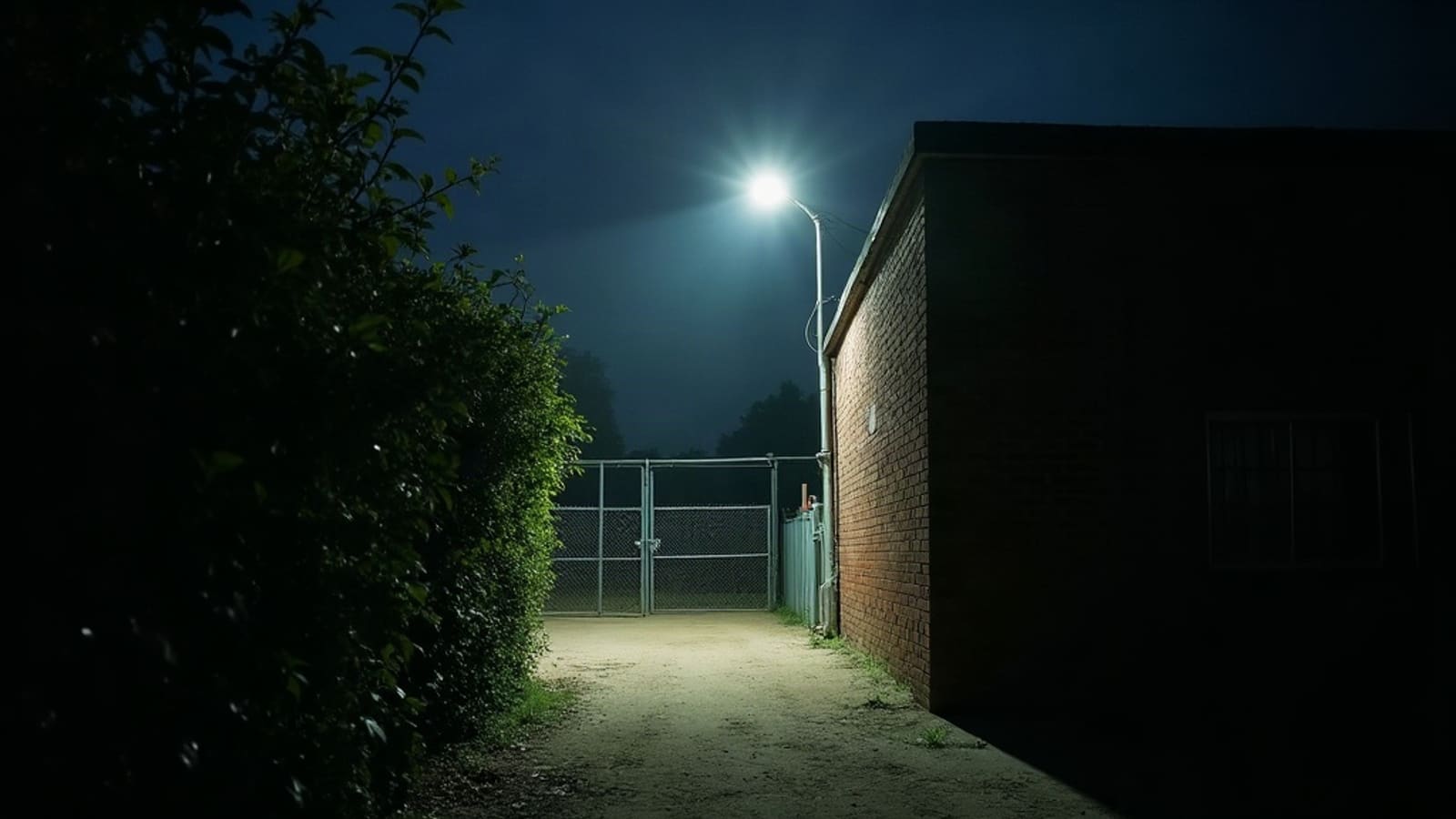
UAP · Pote Street, Chipadze township, Bindura, Zimbabwe · 1996-03-06
The satchel on Pote Street
Chipadze at one in the morning is as quiet as a township gets, which is why Lloyd Karambakuwa, seventeen, did his O-level revision then. On the night of 5 March 1996 his mother was away and he had the house to himself: brick, plastered, neatly kept, a hedge in front still thick from the rains, and across the road the fenced compound of the Women’s Training Centre.
He had barely opened his books when the clicking began: steady, from the road, a little like a cordless phone, except that there were no telephones in the area, and coming closer. He opened the noisy front door, and by the time he reached the road it had stopped. Then it began again behind the Training Centre, out of sight.
He went in, turned off the light and lay down. Ten or twelve minutes later the clicking resumed, twenty or thirty metres away, and this time he eased the door open, walked out and hid in the hedge.
What passed, two metres off, he described to Cynthia Hind three months later with the fright still in it: “I nearly died of shock! I had never seen such a thing!” It was short, about a metre and a half, completely white, moving fast, with a head like a rugby ball or an egg. He saw only its back: a satchel, with an aerial and a small flashing red light on it. It clicked the whole way. He ran for his blankets; the sound came and went three more times until a car somewhere revved its engine.
At a quarter to six he walked the road and found, in the soft sand, about five paired sets of round prints the size of a size 8 shoe, each with a scatter of dots inside. Too big for a normal animal, Hind wrote, and unlike any known pad-mark.
His schoolfriends had slept through it. One suggested an alien. Lloyd doubted that: aliens, as far as he knew, were tall with small heads. But he had heard that a guard at the Training Centre had seen it.
Hind, Maria Sullivan and Gunter Hofer drove up from Harare on 17 June, heard Lloyd out in Pote Street, and went into Bindura to find the security firm. The woman in charge, Constance Savanhu, needed only the date and the place. “Oh, that is the guard who saw the ghost,” she said. The guard was Kambudzai Gweshe, and she no longer worked nights, or there.
Gweshe could not read, so her account reached Hind second-hand, through Savanhu. Between one and two that morning she had heard an unpleasant clicking, like a lift alarm after someone has pressed the button, on and off for twenty minutes. She went to look and saw a small white-covered figure, aerial on its back, moving slowly east along the road. Then it turned south, moved quickly, and its body was bathed in rainbow colours. Its head, she said, was more an animal’s than a person’s. She hid in the Centre until it had gone, refused any more nights, and soon left for day work at the Cotton Company.
Hind had no doubt they had seen the same thing. Nobody saw a craft; it fitted the general idea of an alien, she wrote, and if ghosts exist it fitted that just as well. Under it she printed a French report from 1964: a former soldier out with his cattle on the road from Tarbes who, one morning in early July 1964, watched two figures a little over a metre tall walk bent forward along a hedge, a sack on each back. Whatever walks past hedges, it seems, travels with luggage.
In Cynthia Hind's files
The case file behind this story
- 'Alien' with a Satchel
Cynthia Hind, UFO Afrinews No 15 (January 1997), spread 11-13
Others saw something near here
The circle of light on Mazowe Dam
A white light crossed the hills toward two carp fishermen, went red overhead and left for the dam wall. Then the lake lit up from underneath.

The Ariel School encounter
Sixty-two children at break time said something silver came down beside the playground, and drew the same thing for weeks.
The tsotsis on Lilfordia Road
A disc in a field off the old Bulawayo Road, two men in shiny black overalls, and a passing bean trader shouting that they were tsotsis.

The elliptical sausage over Lake McIlwaine
A bomber pilot and his student turned a Tiger Moth towards a silver sausage. It tipped over and left, then came back over the lake as two saucers and hovered.