UAP · Farm Eikebos, Cederberg valley, near Citrusdal, South Africa · 1995-05-30
Two lights over the Cederberg beacon
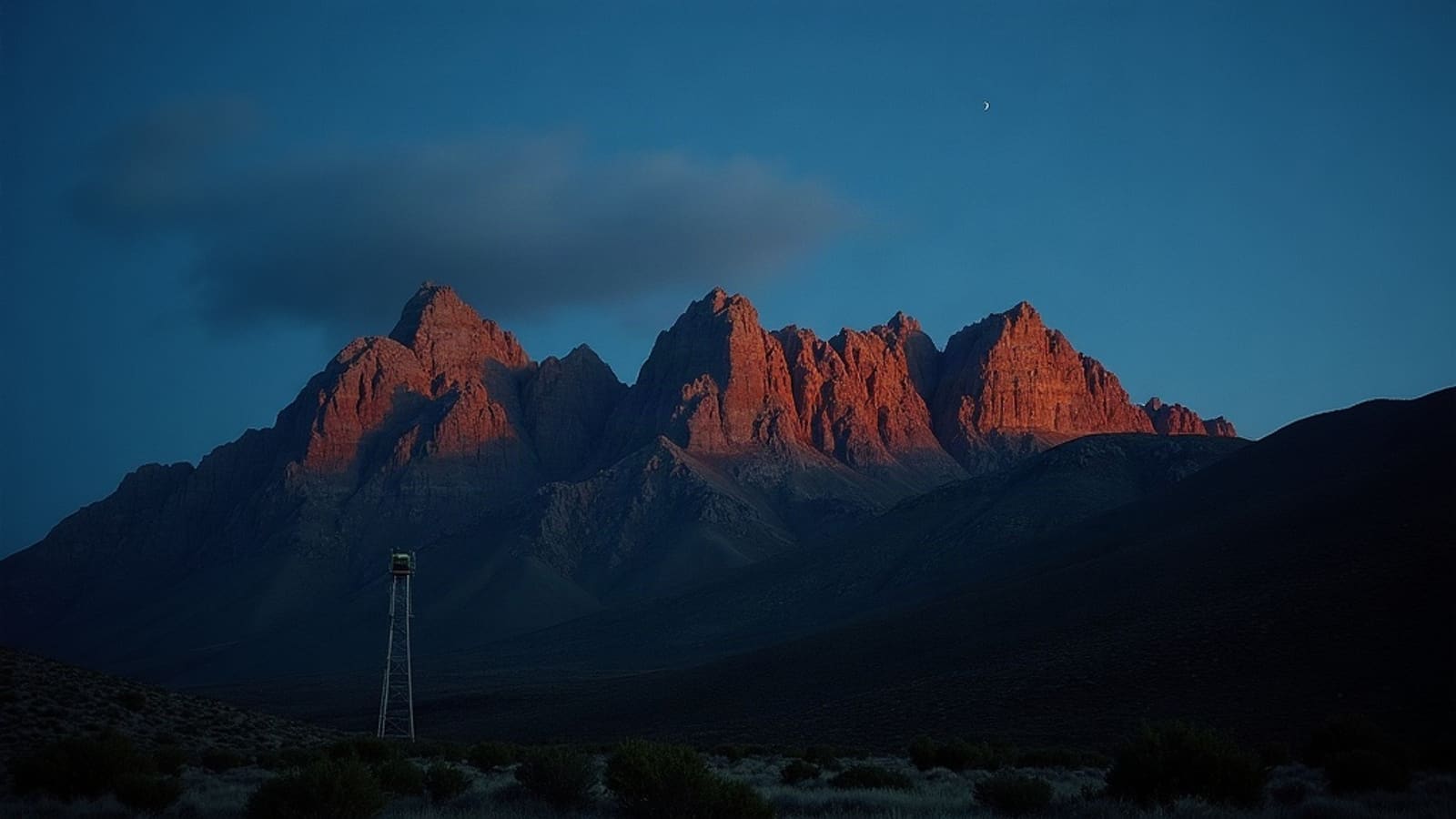
The Cederberg at a quarter to eight on a late May morning is cold, the sun barely over the peaks and the citrus valley below still in shadow. Sukkie Smit, who farmed citrus on Eikebos, was driving the valley road with one of his workers when the man pointed at the sky. Crossing the valley, Smit said, was an oval of bright yellow light, trailing smoke. Close behind it came a second light, not oval but almost perfectly round. Neither made a sound. He watched them pass over the beacon on the mountaintop and drop into the valley beyond his farm, which he said could not be reached on foot. Then heavy smoke rose from behind the ridge. No sound, no glow, just smoke.
He drove back to the homestead and did the sensible thing: he telephoned D F Malan Airport to report a possible aircraft crash, then the police at Citrusdal. Within an hour, he said, the farm was full of police and, he thought, soldiers. The weather was too poor for helicopters out of Cape Town; one may have come from Ysterplaat, and a police helicopter flew two paramedics to the spot he had pointed out. They spent about an hour there. Then the search was called off.
What followed, he said, was all too strange. The police used his house as a base, and the calls in and out were, in his words, “very secretive, short and formal”. When Charl Pouw of the SABC tracked him down, Smit asked the sergeant in charge if he might comment. The sergeant told him to refer the journalist to the police and say nothing himself. Smit went on the radio anyway, briefly and reluctantly, and spoke about the crash of the meteorite, because that was what he had by then been told it was. Nothing, he was also told, had been found.
So he rang the observatory at Sutherland himself. Three meteorites had entered the atmosphere in that period, they said, and all three had gone into the sea. Nobody there knew of a fourth in the Cederberg, and radar showed nothing in that quarter. They added a detail he could not get past: a meteorite that reaches the ground, they said, is no bigger than an old one-Rand coin. What he had watched made smoke a thousand times too big for a coin.
Pam Puxley, investigating for Cynthia Hind’s UFO Afrinews, drove up from Cape Town on 16 June and found Smit on another farm, Brakfontein. He had left Eikebos about two weeks before her visit, within days of the sighting. He told her he had not slept the night it happened, that he still caught himself looking towards the mountains and doubting his own eyes, and that he was afraid to go back to Eikebos, though he would not say why. His worker could not stop talking about it. He was startled to learn that people in Springbok had seen the same objects a quarter of an hour before he did; he had only heard about Piketberg. Asked how he had felt, he went quiet, then said the feeling was too big for words. He believed, he said, that we are not the only life in the Universe.
Hind printed the account as Case No 112 with his sketch: a rayed oval and a small circle, smoke streaming behind them, above a small rectangle marked Beacon, on the long curve of the mountaintop. Whatever Smit and his worker saw go down behind that ridge brought out the police and a helicopter, and left, according to those who went to look, nothing at all.
In Cynthia Hind's files
The case file behind this story
- Mystery Crash on the Cedarberg
Cynthia Hind, UFO Afrinews No 13 (February 1996), spread 16-17