Folklore · The Cape of Good Hope, once the Cape of Storms, South Africa · Printed 1572, in English by 1655
Adamastor, the giant of the Cape of Storms
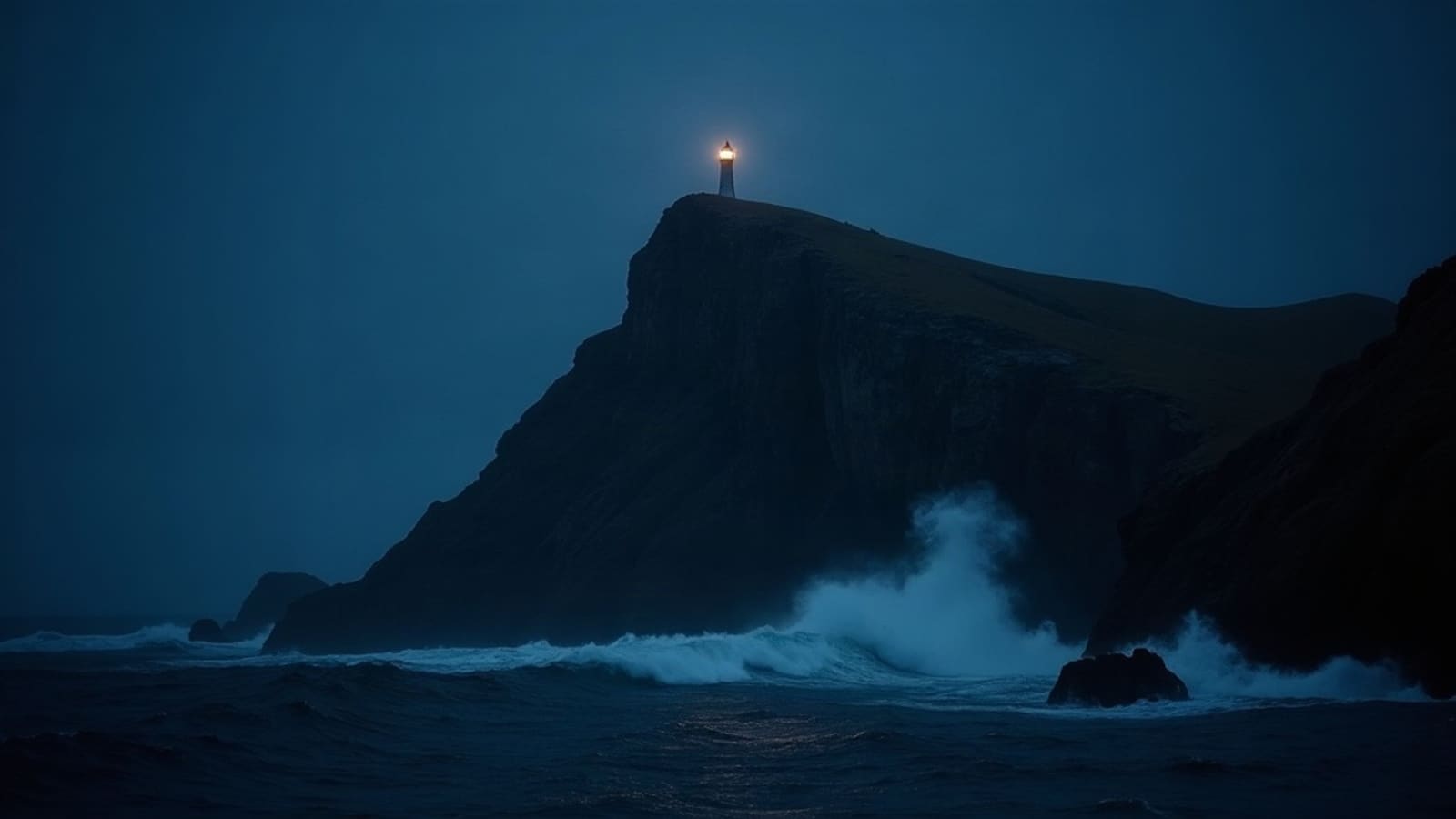
Night, off the southern tip of Africa, late in 1497. Three small ships have been beating into a wind that will not let them round the headland. Then the sky over the Cape goes black in a way that has nothing to do with weather, and out of it a shape rises that is taller than the mountain behind it: a face the colour of old clay, a beard matted with salt, teeth yellow and broken, eyes sunk in their sockets, and a voice that comes up out of the sea floor. It knows who they are. It has been waiting.
That is how Luís de Camões describes it in the fifth canto of Os Lusíadas, the Portuguese national epic, printed in Lisbon in 1572. The giant names himself Adamastor. He is, he says, the great hidden promontory that the Portuguese call the Cape of Storms, and he tells them how he came to be there. He was one of the giants who made war on the gods and lost. In exile he fell for the sea nymph Thetis, and her mother tricked him with a promise: come to the shore at night and she will be yours. He came, he reached out to embrace her, and found his arms round a mountain. The gods, who enjoy that sort of thing, let the joke set. His flesh became earth, his bones became rock, and he was left at the bottom of Africa to guard a sea no one had crossed.
Now someone has, and he curses them for it. Every fleet that follows will pay. The man who first rounded this cape will drown off it, and he names him: Bartolomeu Dias, who did in fact go down with his ship off the Cape in 1500. A nobleman and his wife will be wrecked on this coast and die on the sand, which is a fair summary of what happened to the Sepúlveda family after the São João broke up on the Pondoland coast in 1552. Da Gama, in the poem, keeps his nerve and asks the giant his name, and Adamastor, having said his piece, dissolves with a howl. The wind drops. The ships go round.
Camões knew the coast. He had sailed it himself, been wrecked off Cambodia, and lost an eye in Ceuta, and the giant is a real Cape in a bad mood: the fog that hides Cape Point, the swell that stands up off the shelf, the wind that does not stop for weeks. The Portuguese had already stopped calling it the Cape of Storms and settled on the Cape of Good Hope, which sounds like a renaming committee, and Adamastor is the poet’s objection.
The giant outlived the poem. He became a sailor’s figure, the thing that owned the wrecks along that shore, and later a literary one: Fernando Pessoa turned him into the Mostrengo, the hideous monster, in 1934, and the Durban poet Roy Campbell called his 1930 collection Adamastor and put the giant in its best-known poem, Rounding the Cape. Cape Town has never got round to a statue of him, which is odd, because he is arguably the oldest character in its literature and the only one made of it.
This archive starts its clock at 1600, so the entry sits at 1655, the year Sir Richard Fanshawe put the poem into English and handed the giant to a second navy. The cape still has the fog, the swell and the wind. The wrecks still happen. Adamastor has not been reported in person since 1497, but then nobody has asked.
Others saw something near here

The Flying Dutchman off the Cape
A square-rigged ship under full sail with no wind, seen by a beach full of people, then not seen. The Cape has been telling this one since 1790.

The blue flame at the pool filter
A blue flame danced in the sand beside a Kommetjie pool filter at 2 a.m. By breakfast the pool was two thousand litres down and nothing had leaked.
Single witness
The sea light at Muizenberg and the man in the vlei
A white light over False Bay put a thin beam on the water, then rushed the beach. Walking back, Sandra found a barefoot man thigh-deep in the vlei, facing it.

The rider of Tokai Manor
A father bets his son he cannot ride a horse up the stoep and round the dinner table. He can. It is the way down that kills him, every New Year's Eve since.
Press report
The transformer on Newlands Ravine
A mirrored frame round a gold barrel came down Table Mountain through a bush fire, put out the flames beneath it, and a voice told a schoolboy not to hit it.
Van Hunks and the Devil
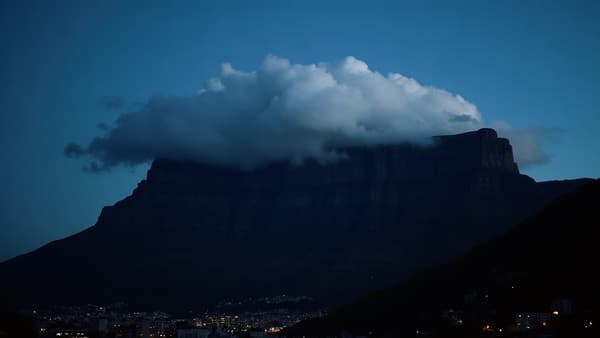
A retired pirate, a stranger in black, a pipe-smoking contest that ran for days, and the cloud that has been pouring off the mountain ever since.
Folklore